article archives
I’m way, way excited about the Nintendo Wii. What I’m most impressed about this new console are the controllers. Here’s what they say about the controllers:
To make gaming as accessible to people of all ages and all abilities, Nintendo wanted to create a controller that was as inviting as it was sophisticated. The outcome is the Wii Remote controller. Nintendo fused the familiarity of a remote control with the sophistication of motion-sensing technology to come up with an input device for the ages!
Sporting the size of a traditional remote control, the wireless Wii Remote controller is a multifunctional device that is limited only by the game designer’s imagination. In a tennis game, it serves as your racket you swing with your arm. In a driving game, it serves as your steering wheel. For first-person shooters, the remote acts as your weapon that you point at an enemy. The list of potential uses goes on and on.
Why isn’t software built like this? A familiar controller that is accessible to all. A multifunctional device that is only limited by the game designer’s imagination. Sounds like a good recipe for “enterprise” software.
Oh Wii, I cannot wait. November 19th cannot come any sooner.
Aren’t you excited yet?
posted by
gilbert
on Saturday, Sep 16, 2006
More good info from Jeff Veen. Four Principles of Interaction Design:
- Discoverability – Make finding stuff easy.
- Recoverability – Actions should be without cost.
- Context – Sense of time, space and meaning.
- Feedback – How the system responds.
I like his take on these aspects of interaction design.
posted by
randy
on Thursday, Sep 14, 2006
I liked this tidbit from Jeff Veen when i heard it at the Future of Web Apps conference today:
“use design techniques to help people engage with data”
More context to follow, but the gist of it lies in the ability of design to add meaning and understandibility to raw data.
posted by
randy
on Thursday, Sep 14, 2006
A few days ago one of my esteemed colleagues (I haven’t even checked to see which one yet) posted the good ol’ adage “Simple things should be simple, complex things should be possible.” While I know it can sometimes help us manage scope and deal with the fact that some things are just plain complicated, it can also result in software that sucks.
In my days at Microsoft, I had a program manager who would cite this maddening little phrase at least a couple of times a month. I would run a usability test showing users banging their head on the desk while trying to accomplish a core task, and he would come back with, “Yeah, it’s complicated, but it’s possible.” Great – but if users can’t find a feature, it doesn’t exist. If they can’t figure it out, it’s worse. If they tell their friends… you can forget Version 2.
So, while acknowledging that sometimes it’s difficult to boil complex things down into manageable chunks -
While conceding that there are multi-step processes that can’t be automated or condensed -
While freely admitting that it’s often better to put out the software NOW rather than waiting to perfect it -
While confessing that I have not always practiced what I am about to preach -
Let me unequivocally advocate that “Simple things should be simple, and complex things should be as simple as possible.”
Thanks – now descending my soapbox.
posted by
ted
on Thursday, Sep 14, 2006
Brian, Randy and I were at the Giants/Rockies game tonight here in San Francisco at the beautiful AT&T Park. A funny thing we realized is the immediate feedback the crowd gives pro ball players. As soon as they complete even the smallest part of their jobs, say swinging the bat, immediate praise or criticism is given in liberal portions by us random bystanders.
This is, of course, a field where successful hitting in 1/3 of your chances is considered MVP-caliber performance. But still, every swing of the bat that results in a big whiff gets prompt and loud BOOOOOs from the crowd. Immediate, effective(?) feedback.
What if we used the same feedback in our work? We started cracking up at the thought of booing or cheering our colleagues at design reviews, especially in the common baseball situation where the bat makes contact with the ball, prompting cheers, only to fall into the glove of the fielder, bringing quick boos.
As if we’d be observing a design coming onto the screen, only to realize it was a total miss. Like that would ever happen.
Or using inspiring music to get each other going between meetings. Maybe some Rob Base, or Kernkraft 4000. Funny to mix the norms of two industries…
posted by
jason
on Wednesday, Sep 13, 2006
Do I win a prize for committing revision 1000 to our prototype subversion server? Tadd? Jason? Prizee?
posted by
gilbert
on Tuesday, Sep 05, 2006
Both SVN and r.bird wrote last week about the latest Hillman Curtis Artist Series with Paula Scher. SVN quoted the above title from a tale about Picasso who sketched a woman and charged her five thousand dollars.. Not because of how much time it took, but because of his entire life’s work that lead up to that perfect sketch.
Once I started work here at the church, I started to realize something similar. Just in the first month, I used skills I had developed over 10 years of experience in web development. Client relationships, XHTML/CSS, ajax, journalism, layout, project management, usability, user studies, even Ruby on Rails.
Today is my first year mark here, and it’s clear that all the experiences I’ve had in my short time in this industry have lead me to contribute in many unique ways here. Called? Elected? I just call it prepared.
Rob and others I’ve talked with share that feeling. We’re all from different backgrounds and each bring a unique set of skills to the table. There also seems to be a little something that led us here to do a few things at this specific moment.
Kindof a cool feeling. I’m certainly not one for the fate argument, but I’m sure I’m where I’m supposed to be. You ever get that feeling?
posted by
jason
on Tuesday, Sep 05, 2006
Edison said that genius is 1% inspiration and 99% perspiration. I don’t want to disagree with a hard-working genius like Edison – effort is certainly crucial when trying to innovate. But here in my current work environment, I think Inspiration might be needed – and provided – in slightly larger proportions…
It’s one of the cool things about working someplace where my personal values are pretty much in line with corporate value. If someone asks you what you do for a living, you can say, “Whatever God wants.” That’s a little cheeky, but when you work for the Church, your daily task list is driven not by advertising, sales figures, page views, or the almighty dollar… but in some sense by the Almighty Himself.
What is it He wants to accomplish by this web site, application, or whatever? Whether it is to teach the Gospel, help a prospective missionary fill out his papers, disseminate policy directives to local leaders, or show somebody in Zimbabwe how to do family history, the goal is something that Matters, not just to the “company” or even to “the customer”, but to God, and therefore to me.
That’s the Inspiration that drives my Perspiration.
posted by
ted
on Tuesday, Sep 05, 2006
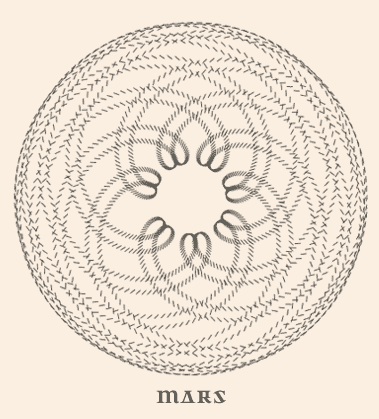
I recently ran across a diagram that showed the “orbit” of the planet Venus around the Earth. Sure, we all know that the planets go around the Sun, but for thousands of pre-Galileo years, the Earth was the center. It’s very simple to draw, explain, and show the orbit of the planets around the Sun, and we all understand the concept of heliocentricity without a problem. It’s simple, The Earth goes around the Sun, the planets go around the Sun, we’ve got it.
However, if you try to describe, or draw the orbit of the planets from a geocentric perspective, it can be quite difficult. There is a pattern, it does repeat, and it actually creates a nice design, but it is very complex to illustrate and explain.
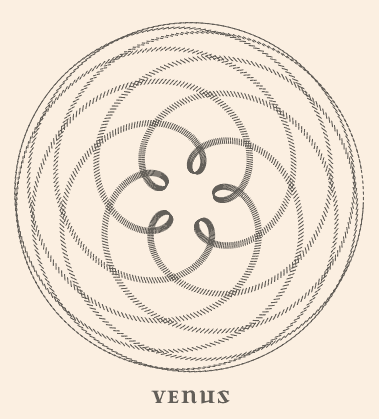
So it goes with design, sometimes you need to change your perspective in order to visualize the solution in its most simple form. Sometimes you need to find ways to help your users change their perspective so that they can see the problem from your perspective. Sometimes your users are already visualizing the problem from the simplest perspective, and you change it, or redesign it to work from your perspective.
As designers it’s our job to visualize things from different perspectives, hunting down the simplest, and most elegant solution, and bringing that to our users.
posted by
john
on Thursday, Aug 31, 2006
Heidi is a young mother of three, taller than average, dark-haired, soft-spoken, and kind. She and my wife were two of four parents together in a Joy School group when we lived in the Seattle area. And we just found out this week that she has been diagnosed with cancer.
My RANT against technology in this post has to do with the fact that we didn’t find out about her condition until several months had passed—several months when we could have given support, expressed our concern, and included her in our prayers. Why several months? Because the message came to an old Hotmail account that we had abandoned because it was inundated with solicitations, pornographic messages, and all manner of spam. My wife checks it every once in a while to see if anything improtant has come through, or we would have continued clueless about our friends plight. I know many bright minds are working on the spam problem… but can you please work a little faster? I don’t want to have to change my address every six months to keep it clean. It’s not just about convenience and hassle anymore… it’s about communication with those we care about.
My RAVE about technology in this post is a kudos to the Seattle Cancer Care Alliance, a chief member of which is the Fred Hutchinson Cancer Research Center (lovingly known as ‘the Hutch’ in Seattle parlance). Their Care Pages, site is a great example of how technology can bring together people with a common cause and make a real difference in people’s lives.
The site is not a perfect model of great interaction design, but it is functional, and you can’t beat the content. The site provides a place where patients can host their own page, post an update to keep others informed while retaining whatever degree of privacy they desire. All for free.
But to me, the coolest thing was the message board. Scanning through the posts on Heidi’s page, I found love and encouragement from many that I knew and many I did not – old friends from Church, neighbors, family members, people who had lost a loved one to cancer, local Church leaders – all united in their concern and support for Heidi.
Good Luck to Heidi and all those in her position, and Good Job to the non-profits out there who are trying to make a difference, and using technology wisely to do it.
posted by
ted
on Tuesday, Aug 29, 2006
Over a year ago I read an article in Communication Arts by Tim Williams titled Keep Your Best People Doing What They Do Best. At the time I had just left my previous employer where I had been for over 6 years.
Each year during the annual reviews I would get 10 minutes of how much I was appreciated and what I was good at and then we would focus on what I could do to improve for the remainder of the hour. I’m glad I was one of the above average performers. Yes the feedback made me a better person in the end but there has to be a balance to constructive feedback.
T. Williams struck a chord with the following:
The fact is that if you have people with exceptional talents, chances are they will also have exceptional weaknesses. (In fact, these weaknesses are likely to be mirror images of their strengths.) The sooner you accept that fact, the happier you’ll be as a manager.
There are many great points that he goes on to make but here is what I love about this article.
Effective managers don’t waste their emotional energy complaining about how their people don’t do their jobs. Instead, they place them in positions where they can succeed and focus their efforts on building their personal strengths, not “correcting” their personal weaknesses.
I’m not advocating that we let truely bad behaviors go unchecked but I think there has to be a balance. In my previous employment a manager had to come up with 2-3 documented things that you needed to improve upon so that you could improve the next year and get your merit increase.
I think it all starts with the job interview. If you can identify candidates that meet the bar in all areas (and hopefully excel in a few) then you won’t have to be in the position where you have to raise them up just to be successful. Instead the good employees will constantly take their game to the next level.
posted by
matt
on Sunday, Aug 27, 2006
Eventhough my kids are not old enough to own cell phones, I often wonder what kind of phone I can give them when the time comes.
The Firefly phone, which came out several months ago, is a good solution for younger kids (maybe 6 thru 12 years old?). There’s a Mom and Dad speed dial and a controlled address book. Really, really simple. I love this phone.
And more recently, Disney Mobile comes out with a phone which I think is perfect for 12 and up. Each phone is equipped with GPS so you can locate the phone with an address and a map! (As long as your child has the phone, you can find them too!) You can also designate the time and day the phone can be used, control the address book, send text messages and more. And just like any phone carrier, you can choose your phone and plan.
Although they don’t say it on the site, it looks like you don’t have to have the entire family on their phones and plans. You can buy one phone and set everything up from their site. Click on the “Learn more” link on their main homepage graphic and watch the demo.
posted by
gilbert
on Saturday, Aug 26, 2006
I don’t know if they still do this, but Microsoft used to hold an annual Design Day. The design community at Microsoft would come together for a day of talks, panels, food and fun.
The highlight, for me, was the Team Speed Design contest. Four teams of four designers each competed to show off their design skills. The teams came from different product groups around the company. It was held in an auditorium with a stage and some whiteboards. One by one each team would come in, receive the design problem, and be given 20 minutes to create and present a solution. The other teams were kept away from the auditorium so they wouldn’t see or hear anything until it was their turn. Each contestant wore a microphone and the entire process was carried out in front of a live audience.
After each performance a panel of judges gave critique on the design. Scores were awarded based on things like process, simplicity, and aesthetics. Finally, the winning team was announced.
This is an intense, challenging competition. Imagine compressing a design project into an utterly, ridiculous time frame and then being asked to allow a 100 people to watch and listen while you work. It was good fun, but there was a bit of team and personal pride involved. Teams would practice multiple times before the event. The teams came to win.
My favorite design problem was the parallel parking problem. Each team was asked to design a new system that would help drivers parallel park their cars. One team had three members who didn’t own cars. The hysterical moment was when the only team member who did have a car, pantomimed step by step for the others what its like to parallel park a car. As the “car” backed up, with her hands on the “wheel”, she slowly stepped backwards looking over her shoulder all the while talking the others through what she was doing. It was a “had-to-be-there” moment, but it was pure comic gold.
This week I’ve been taking in all the news on the self-parking Lexus. It has two parking modes: the “provide help for you” mode and the “do it for you” mode. I wish I could go back in time and compare the designs from that speed design contest to the shipping Lexus design. I wonder how close the Microsoft designers got with 20 minutes of work.
posted by
tadd
on Saturday, Aug 26, 2006
As our friend Jason embarks to South Dakota for a week with his family, we say good luck with the little kids in the car for 15 hours (one way)!
While you’re there, please take on some freelance work and redesign their state’s site :)
We’ll see in a week, dude. Du-wayne will totally miss you.
posted by
gilbert
on Friday, Aug 25, 2006
Fresh out of our User Experience Group meeting (see photo below), I had to run look up an article we read late last year in reference to one of our “cultural beliefs” here in the Information and Communications Systems department. This particular belief is that “performance = results,” and it explains a core belief we have in the UxG.
What does “performance = results” mean? It means performance != effort. It means your success depends not on the amound of hours or the extra effort you’re putting into a solution, but rather the result of that work. If I can solve a problem in an hour, and someone else in five hours, who’s working harder? Longer? Better?
It reminded me of this article from Newsweek by Eric Schmidt and Hal Varian from Google, called Google: Ten Golden Rules, with the subhead “Getting the most out of knowledge workers will be the key to business success for the next quarter century. Here’s how we do it at Google.”
Let me quote right from the beginning:
“At google, we think business guru Peter Drucker well understood how to manage the new breed of ‘knowledge workers.’ After all, Drucker invented the term in 1959. He says knowledge workers believe they are paid to be effective, not to work 9 to 5, and that smart businesses will ‘strip away everything that gets in their knowledge workers’ way.’ Those that succeed will attract the best performers, securing ‘the single biggest factor for competitive advantage in the next 25 years.’”
We are seeking to provide that very environment here, and we find that it works beautifully. We, the creative class, are here to perform. And performance means results. It means we’re paid to be effective, make 1,000 great decisions every day, and take this mentality and inspire others in the organization to follow suit.
We’re proving it works.
Schmidt outlines several key principles of creating and thriving in this kind of environment – a checklist of how to succeed and then attract even more like us. The points (briefly – see the article for more explanation):
- Hire by committee.
- Cater to their every need.
- Pack them in.
- Make coordination easy.
- Eat your own dog food.
- Encourage creativity.
- Strive to reach consensus.
- Don’t be evil.
- Data drive decisions.
- Communicate effectively.
We’re doing each of these things here, and it’s changing a lot. Just today a candidate came in to meet the team and remarked, “I didn’t expect [the environment] to be so fun.” Candidates come here and they want to be part of it. They’re surprised to find it at a church / non-profit, and they’re thrilled to be part of it. Customers, which here are internal, are starting to say things like “I couldn’t have asked for more,” and users say things like “it’s so easy I think I’m doing something wrong.”
And you know what? It’s contagious. Other departments start to take notice, and the excitement, passion, and desire starts catching on. Which, really, is what we’re aiming for.
posted by
jason
on Friday, Aug 25, 2006
Yahoo’s brand is one to envy, in my opinion. They have really stepped up their design quality in just the past year. Tech.yahoo.com is a great example of that. And while Yahoo’s pages are still a little heavy content-wise, they look and feel good.
We also talk a lot here about how their different brand extensions – yahoo.com, tech.yahoo, finance.yahoo, and even yodel are all different but still pull in the recognizable Yahoo! brand in a way that retains the smaller brands of those sites but still is 100% Yahoo.
And, their sites are css-driven and tableless, tho with a total disregard for validation (yahoo.com has 200 errors!). Still, they certainly have the design edge over Google and Microsoft, at least for now.
posted by
jason
on Thursday, Aug 24, 2006
When I first got into software usability and design, I did it because I was tired of working as a technical writer, whose primary function was to describe how to work around software that didn’t work right. First as a usability engineer, now as an interaction designer, it’s become my job to prevent problems in the first place.
The more I do this kind of work, the more I realize it’s not just a business enterprise, it’s an ethical enterprise—not just to solve a business problem, but to “do no harm” along the way and ideally even to make using software a pleasurable experience.
When I worked at a software company in a previous job, I created a 99 second video collage of highlight clips from field studies and usability tests entitled “99 Seconds of User Pain” and showed it at an internal design event. It was a horrific barrage of puzzlement, expletives (tastefully edited of course), and even some tears and head-banging. The point was not to make fun of our users, but to show the depth of frustration we as a company were inflicting on them.
The video was a hit; the audience gasped and moaned and laughed at themselves—not at our poor users. People (even those working for large monolithic software companies) don’t generally want to hurt other people. They just don’t realize they are doing exactly that a lot of the time.
It’s our job as UX professionals to show developers the Golden Rule in action, and to keep them (and us) from breaking it. Not that users always know what they want—because they don’t. But they do know when they are in pain. It’s our ethical responsibility to relieve it, and even replace it with satisfaction or (heaven forbid) enjoyment.
posted by
ted
on Thursday, Aug 24, 2006
In our jobs, working for the LDS Church, we work on projects that do not generate financial income. This is very different than the corporate world that I’m used to, but also a very good thing. The projects we work on do not generate income, but they do use financial resources of the Church, and the bar is set very high to use those resources in the most effective way possible. This environment requires an extra level of vigilance and “project soul searching” that may not happen (although it probably should) in the corporate world. In this quest for meaning, I’ve been bombarded with questions. The process of questioning doesn’t always get to the answer. In fact, if you’ve got all the answers, the chances are that you don’t really understand the problem. The purpose of questioning is to gain a better understanding of the problem, where your solution fits in, and what effect it will really have on your customers and end users.
- What am I doing?
- Why am I doing it?
- Who am I doing it for?
- Why do they need it?
- Is it really an issue for them, or is it for me?
- Is what I am doing useful?
- Is it necessary?
- Am I really hungry already?
- What is the Issue?
- Why is it an Issue?
- How important is the Issue?
- What would happen if I didn’t try to solve the issue?
- Are there other options for addressing the issue?
- Is there already a solution that addresses the issue?
- Has the existing solution been implemented?
- If so, why hasn’t that fixed the issue?
- What is this isn’t really the issue?
- Is there an issue bigger than the issue I think I’m trying to solve?
- Where am I going to go for lunch?
- Is there a smaller, more focused issue that I haven’t thought of that would be easier to solve?
- What is the proposed solution?
- Why is that a solution and not a new problem?
- What is the objective of that solution?
- Who is going to use that solution?
- Why are they going to use it?
- What is the solution going to change?
- How are you going to know that it will really change?
- How important is that solutions, really?
- Is that solution possible?
- Are you sure that it is not possible?
- How much money do I have for lunch?
- Do you have the resources (time, money) to implement the solution?
- Do you really want to implement the solution?
- Are there situations or circumstances where the solution won’t work like you expect it to?
- Are there other solutions that this new solution will replace?
- Are there new solutions that must be developed because of this solution?
- Is it lunch time yet?
Andy Rutledge makes some good points on this also in his article “Seek Understading, Not Answers”
posted by
john
on Wednesday, Aug 23, 2006
We are a group of designers in Salt Lake City, and NorthTemple is our shot at contributing back to the web design community, in return for so much we’ve received from it. Each of us rely on the web community every day, and this is our way of taking what we’re learning in some pretty unique circumstances and sharing it with this thing we call the internets.
NorthTemple.com is built as a “tumblelog”, a stream of consciousness type of blog where we’ll be posting at all hours and with content of all type—articles, quotes, links, photos, videos, and more.
The site is still very new. We’ll be introducing comments very shortly, as well as adding our designers to the site and launching some extended bios and archives of it all.
We hope you enjoy. Don’t forget to grab our atom feed to keep up with the log.
posted by
jason
on Friday, Aug 18, 2006